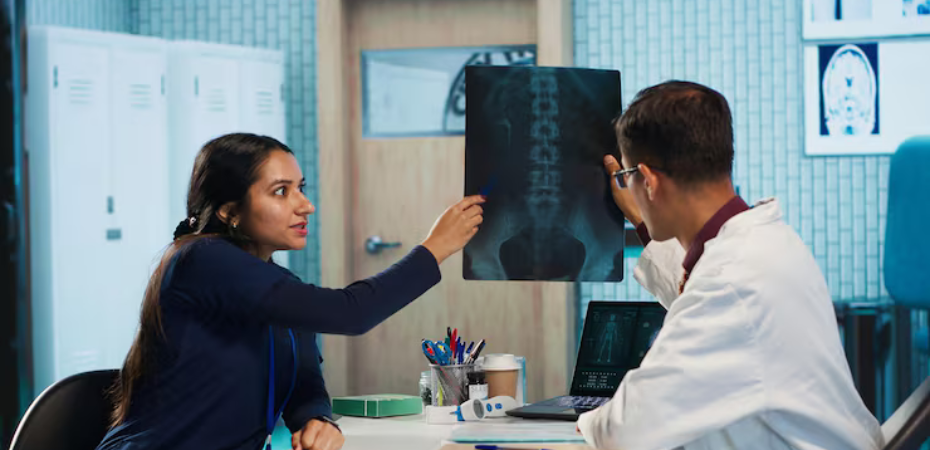
Spinal stenosis is a condition in which the spaces within the spine (spinal canal) become narrowed, putting pressure on the spinal cord and surrounding nerves. It most commonly occurs in the lower back (lumbar spine) and neck (cervical spine), often as a result of age-related changes such as disc degeneration, thickened ligaments, or bone overgrowth.
This gradual narrowing can significantly affect mobility and quality of life if left untreated. Dr. Bansal focuses on accurate diagnosis and a stepwise treatment approach aimed at relieving nerve compression and restoring function.
Common Symptoms
Chronic back or neck pain:
Persistent pain that may worsen with standing, walking, or prolonged activity.Leg pain (neurogenic claudication):
Pain, heaviness, or cramping in the legs while walking or standing, often relieved by sitting or bending forward.Numbness or tingling:
A “pins and needles” sensation in the legs, feet, arms, or hands, depending on the level of stenosis.Weakness in limbs:
Muscle weakness that can affect balance, coordination, and walking ability.Difficulty walking or standing for long periods:
Patients may feel the need to frequently sit down or lean forward (such as on a shopping cart) to relieve discomfort.
Causes
Age-related degeneration of spinal discs
Thickening of ligaments (ligamentum flavum hypertrophy)
Bone spurs (osteophytes)
Herniated discs
Previous spinal injuries or surgeries
Treatment Approach
Dr. Bansal tailors treatment based on the severity of symptoms and the degree of nerve compression.
1. Conservative Management
Pain medications and anti-inflammatory drugs
Physiotherapy to strengthen muscles and improve posture
Activity modification and lifestyle changes
Epidural steroid injections to reduce inflammation and nerve irritation
This approach is often effective in mild to moderate cases.
2. Surgical Decompression (for Severe Cases)
When symptoms are severe, progressive, or do not respond to non-surgical treatment, surgery may be recommended.
Decompression procedures (Laminectomy):
Removal of the part of the bone or thickened tissue that is compressing the nerves.Minimally invasive techniques:
Smaller incisions, less muscle damage, reduced blood loss, and faster recovery.Spinal fusion (if required):
In cases with instability, adjacent vertebrae may be stabilized to maintain proper alignment.
Expected Outcomes
Relief from nerve-related pain:
Reduction in leg or arm pain and discomfort.Improved walking capacity:
Patients can walk longer distances without pain or fatigue.Better strength and sensation:
Gradual improvement in numbness, tingling, and muscle weakness.Enhanced quality of life:
Increased independence and ability to perform daily activities comfortably.
Early evaluation is important, especially if symptoms begin to interfere with walking or balance. With timely and appropriate treatment, spinal stenosis can be effectively managed, allowing patients to regain mobility and lead an active life.