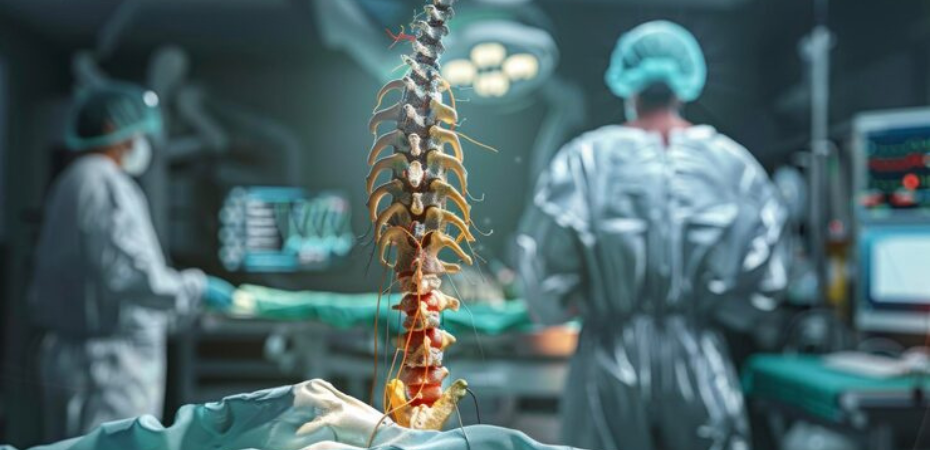
Keyhole spine surgery is a modern, minimally invasive surgical technique that allows treatment of spinal conditions through very small incisions—often just a few millimeters in size. Instead of large cuts used in traditional open surgery, this approach uses specialized instruments and high-definition imaging to precisely access and treat the affected area while preserving surrounding muscles and tissues.
This technique is widely used for conditions like slip disc, spinal stenosis, nerve compression, and certain cases of spinal instability.
How Keyhole Spine Surgery Works
A tiny incision (“keyhole”) is made near the affected spinal level.
A tubular retractor or endoscopic system is inserted to create a small working channel.
A high-definition camera or microscope provides a magnified view of the surgical area.
Specialized instruments are used to remove the source of nerve compression (such as disc material or bone spurs).
This targeted approach minimizes disruption to normal anatomy.
Conditions Treated
Herniated (slip) disc
Sciatica and nerve compression
Spinal stenosis
Selected cases of spinal instability
Key Benefits
Very small incision:
Minimal scarring and better cosmetic results.Reduced pain:
Less tissue damage leads to significantly lower post-operative discomfort.Faster recovery:
Patients can return to daily activities much sooner.Minimal blood loss:
Precision technique reduces surgical trauma.Short hospital stay:
Many procedures are done as day-care or require only a brief admission.Lower risk of complications:
Reduced infection rates and quicker healing.
Recovery & Outcomes
Early mobilization, often within hours
Quick return to work and normal routine
Effective relief from pain, numbness, and weakness
Minimal disruption to lifestyle
Why Choose Keyhole Spine Surgery?
Keyhole spine surgery combines the effectiveness of traditional procedures with the advantages of minimally invasive technology. It is particularly beneficial for patients seeking a safe, precise, and less painful solution with minimal downtime.
With proper patient selection and expert surgical care, this technique offers excellent outcomes and a faster path to recovery, helping patients regain mobility and quality of life with minimal interruption.