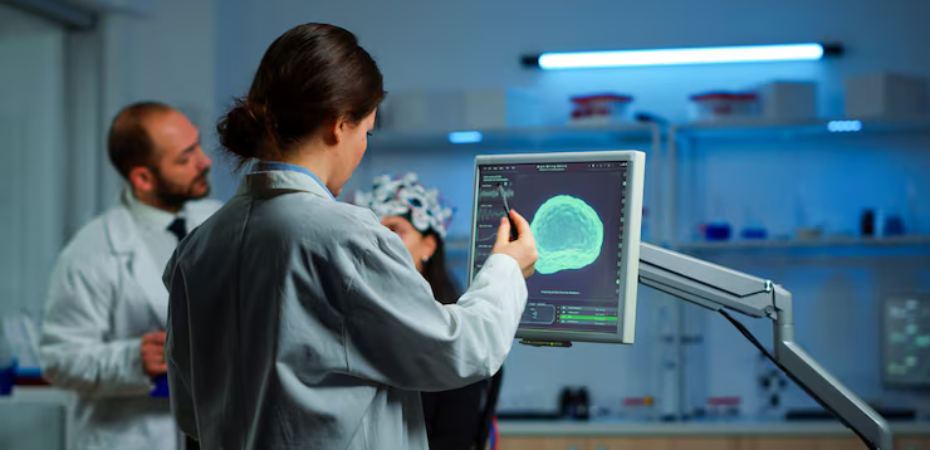
Navigation-assisted neurosurgery is an advanced, computer-guided surgical technique that enables surgeons to operate on the brain and spine with extreme precision. It works by integrating pre-operative imaging (such as MRI or CT scans) with real-time tracking systems, allowing the surgeon to visualize the exact location of surgical instruments during the procedure.
This technology functions like a “GPS system” for neurosurgery, ensuring millimeter-level accuracy even in complex or delicate areas where critical nerves and blood vessels are present.
How It Works
High-resolution MRI or CT scans are taken before surgery.
These images are converted into a detailed 3D digital map of the patient’s anatomy.
During surgery, special tracking devices are attached to instruments.
The navigation system continuously shows the surgeon the exact position of tools in relation to the brain or spine structures in real time.
This allows highly accurate planning and execution throughout the procedure.
Applications
Brain tumor surgery
Deep-seated lesion removal
Complex spinal deformity correction
Minimally invasive brain and spine procedures
Revision surgeries with altered anatomy
Biopsy of small or hard-to-reach lesions
Key Benefits
Millimeter-level precision:
Enables highly accurate targeting of diseased tissue.Improved safety:
Helps avoid injury to vital structures such as nerves and blood vessels.Smaller incisions:
Supports minimally invasive surgical approaches.Better surgical planning:
Provides a clear roadmap before and during surgery.Higher success rates:
Enhances accuracy in tumor removal and spinal corrections.
Recovery & Outcomes
Reduced surgical trauma and tissue damage
Lower risk of complications
Faster post-operative recovery
Improved neurological outcomes in complex cases
More predictable and stable results
Why It Is Important
Navigation-assisted neurosurgery represents a major advancement in modern brain and spine surgery. By combining medical imaging with computer technology, it allows surgeons to operate with greater confidence and precision, especially in areas where even small errors can have significant consequences.
This technology significantly improves both surgical safety and patient outcomes, making complex neurosurgical procedures more effective and less invasive.