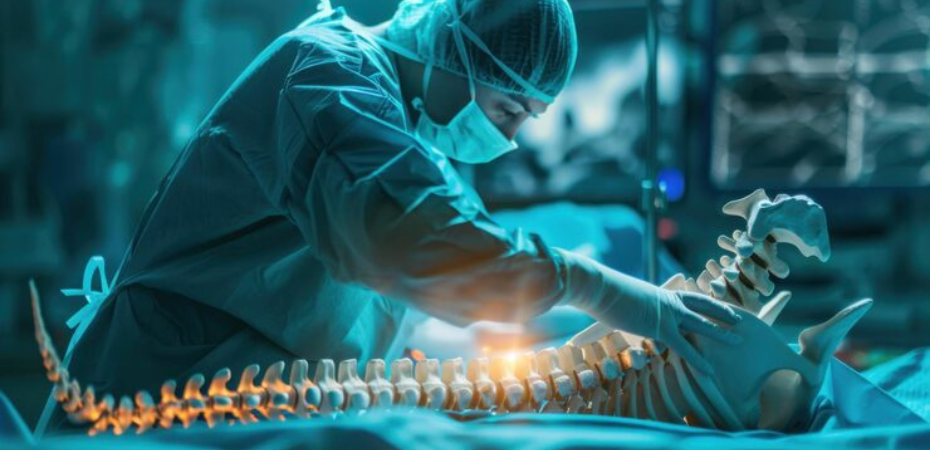
Motion preservation spine surgery refers to a group of advanced surgical techniques designed to treat spinal disorders while maintaining the spine’s natural movement. Unlike traditional fusion surgery—which permanently joins two or more vertebrae-these procedures aim to relieve pain and nerve compression without restricting flexibility.
This approach is especially beneficial for younger, active patients or those with early to moderate degenerative spinal conditions, where preserving mobility is a priority.
How It Works
The damaged disc or compressing structure is carefully treated or replaced.
Specialized implants or techniques are used to maintain normal spacing and alignment.
The spine is stabilized without permanently fusing the bones together.
Natural motion at the affected segment is preserved as much as possible.
Types of Motion Preservation Techniques
Artificial Disc Replacement (Cervical/Lumbar):
A damaged disc is replaced with an artificial implant that allows movement similar to a natural disc.Dynamic Stabilization Systems:
Flexible implants support the spine while allowing controlled motion.Non-fusion decompression techniques:
Removal of pressure on nerves without restricting spinal movement.
Conditions Treated
Cervical and lumbar disc degeneration
Herniated (slip) discs
Early degenerative disc disease
Selected cases of spinal instability
Nerve compression causing pain or sciatica
Key Benefits
Preserves natural spinal movement:
Maintains flexibility and range of motion.Reduced stress on adjacent segments:
Lowers risk of degeneration in nearby spinal levels.Faster recovery in many cases:
Less restriction compared to fusion surgery.Improved functional outcomes:
Supports return to active lifestyle.Less risk of long-term stiffness:
Avoids permanent fusion-related rigidity.
Recovery & Outcomes
Early mobilization after surgery
Reduced stiffness and improved flexibility
Significant relief from pain and nerve compression
Better long-term spinal function compared to fusion in selected patients
Why Motion Preservation Matters
Traditional spinal fusion can effectively relieve pain but may limit movement and place extra stress on adjacent spinal levels over time. Motion preservation techniques offer a modern alternative by addressing the problem while keeping the spine as natural and functional as possible.
With careful patient selection and advanced surgical expertise, these procedures provide long-term relief while maintaining spinal mobility and improving overall quality of life.